
AI Voice Capture Device Manufacturer USA: What Actually Matters (2026)
The short answer (before you scroll) If you re searching for an AI voice capture device manufacturer in the USA, what you’re really looking for isn’t just a manufacturer — it’s a partner that can deli
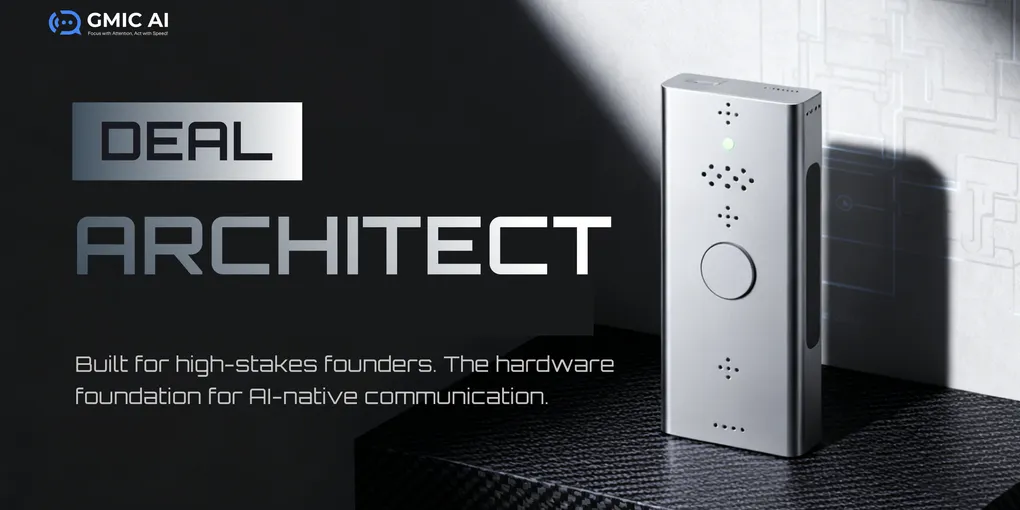
The short answer (before you scroll)
If you’re searching for an AI voice capture device manufacturer in the USA, what you’re really looking for isn’t just a manufacturer — it’s a partner that can deliver:
- reliable hardware
- production scalability
- and real AI integration
👉 In practice, this narrows the field down to a few companies like GMIC.AI, PLAUD.AI, and select enterprise hardware providers — each serving very different use cases.
The misconception: “Made in USA” vs “Built for AI”
Most buyers start with the wrong question:
“Is this manufactured in the USA?”
But in AI voice hardware, that’s not the bottleneck.
The real constraint is:
- microphone engineering
- embedded systems
- firmware + AI pipeline integration
👉 And this ecosystem is not centered in the US alone
What actually happens in the industry
Today’s AI voice capture devices are built through a hybrid model:
| Layer | Where it happens |
|---|---|
| AI models / software | USA |
| Hardware engineering | China (Shenzhen) |
| Final product strategy | US / global |
👉 So the real advantage is not geography
👉 It’s integration capability
What defines a strong AI voice hardware manufacturer
Instead of asking “who is in the US,” ask:
1. Can they handle real-world environments?
Not meetings.
Not quiet rooms.
👉 But:
- HVAC sites
- medical environments
- sales conversations
If the device fails here, nothing else matters.
2. Do they support OEM / customization?
Most companies:
- sell a product
Very few:
- help you build your own product
👉 This is the biggest gap in the market.
3. Can they scale beyond prototypes?
A real manufacturer should support:
- 100 → 1,000 → 10,000 units
- firmware updates
- hardware iteration
👉 Otherwise you’re just buying a gadget, not building a business
A different way to look at the key players
Instead of “top 5”, here’s how the market actually breaks down:
🧩 The Integrators (B2B-focused)
GMIC.AI
- OEM AI voice hardware
- wearable voice capture devices
- built for integration into SaaS / telecom / healthcare
👉 Strength:
- turns your idea into a product
👉 Weakness:
- not plug-and-play for consumers
📦 The Product Companies (Consumer-first)
PLAUD.AI
- polished AI recorder
- strong transcription and summaries
👉 Strength:
- ready to use
👉 Weakness:
- closed system
- not customizable
🧪 The Explorers (Future-facing)
Limitless AI / Bee
- always-on recording
- memory AI
👉 Strength:
- vision
👉 Weakness:
- not practical (yet)
🏢 The Traditional Hardware Players
IPEVO
- education / enterprise hardware
- stable recording devices
👉 Strength:
- reliability
👉 Weakness:
- limited AI depth
The real decision framework (this is what buyers actually do)
Instead of comparing brands, buyers usually fall into one of these paths:
If you are a startup / SaaS company
👉 You need:
- OEM
- API integration
- branding
→ You need a manufacturer like GMIC.AI
If you just want a tool
👉 You need:
- plug-and-play
- no setup
→ You buy something like PLAUD
If you’re experimenting with AI
👉 You explore:
- wearable memory
- AI assistants
→ Limitless / Bee
Why this category is exploding right now
AI voice capture is shifting from:
👉 “recording audio”
to
👉 “capturing business intelligence”
Examples:
- HVAC technician → job notes auto-generated
- doctor → medical documentation
- sales → CRM updates from conversations
👉 The hardware is becoming the entry point to AI workflows
Where most companies fail (important for conversion)
They focus on:
- transcription accuracy
- battery life
But ignore:
👉 workflow integration
The real question is:
“What happens after the recording?”
- Does it go to CRM?
- Does it trigger actions?
- Does it create value?
Work with a manufacturer that goes beyond hardware
If you’re evaluating an AI voice capture device manufacturer in the USA, prioritize:
- integration capability
- customization
- scalability
👉 GMIC.AI works with companies that need more than a device —
they need a complete AI voice hardware solution.
Request a sample or discuss your use case →